MINERAL
PAPER
but the flexible, mineral-based medium, its environmentally friendly existence,
and its unique characteristics are pushing it to fast popularity.
WHAT IS
Mineral Paper?
This new discovery paper does not use cellulose fibers as its raw material, meaning it does not use wood pulp as its raw material. The main raw material used is Calcium carbonate, which is one of the most abundant minerals on Earth.
The process involves mixing fine powder of calcite rock with non-toxic resins, melting at high temperatures and forming into sheets like paper.
These sheets are not like conventional wood-based paper; they are smoother, cannot be torn easily, and are water or rather liquid-repellent. Ink writes just as well, or even better.
“Mineral paper is thus tough, durable, water and tear-resistant, soft, smooth, and bright paper that performs like a film but without all the petroleum!”
No Trees. No Pulp.
Made from calcium carbonate, a naturally occurring mineral — not from wood.
Smoother. Stronger. Smarter.
Tear-resistant, waterproof and ultra-smooth for an exceptional writing experience.
Writes Beautifully.
Ink glides better on mineral paper — for a clean, crisp and smudge-free finish.
Sustainable by Nature.
A conscious choice for a cleaner planet and a greener future.
WHY
MINERAL PAPER?
One metric ton of conventional paper made from wood uses around 4 metric tons of wood chips from around 20 large trees that are cut down. In the last 40 years, worldwide paper consumption has increased by 400%. Fiber used as raw material comes from 35% of wood harvested.
The main raw material (about 80%) of mineral paper is calcium carbonate in the form of calcite, rocks, marble, or others, which implies no trees are cut down as is the case with conventional papermaking.
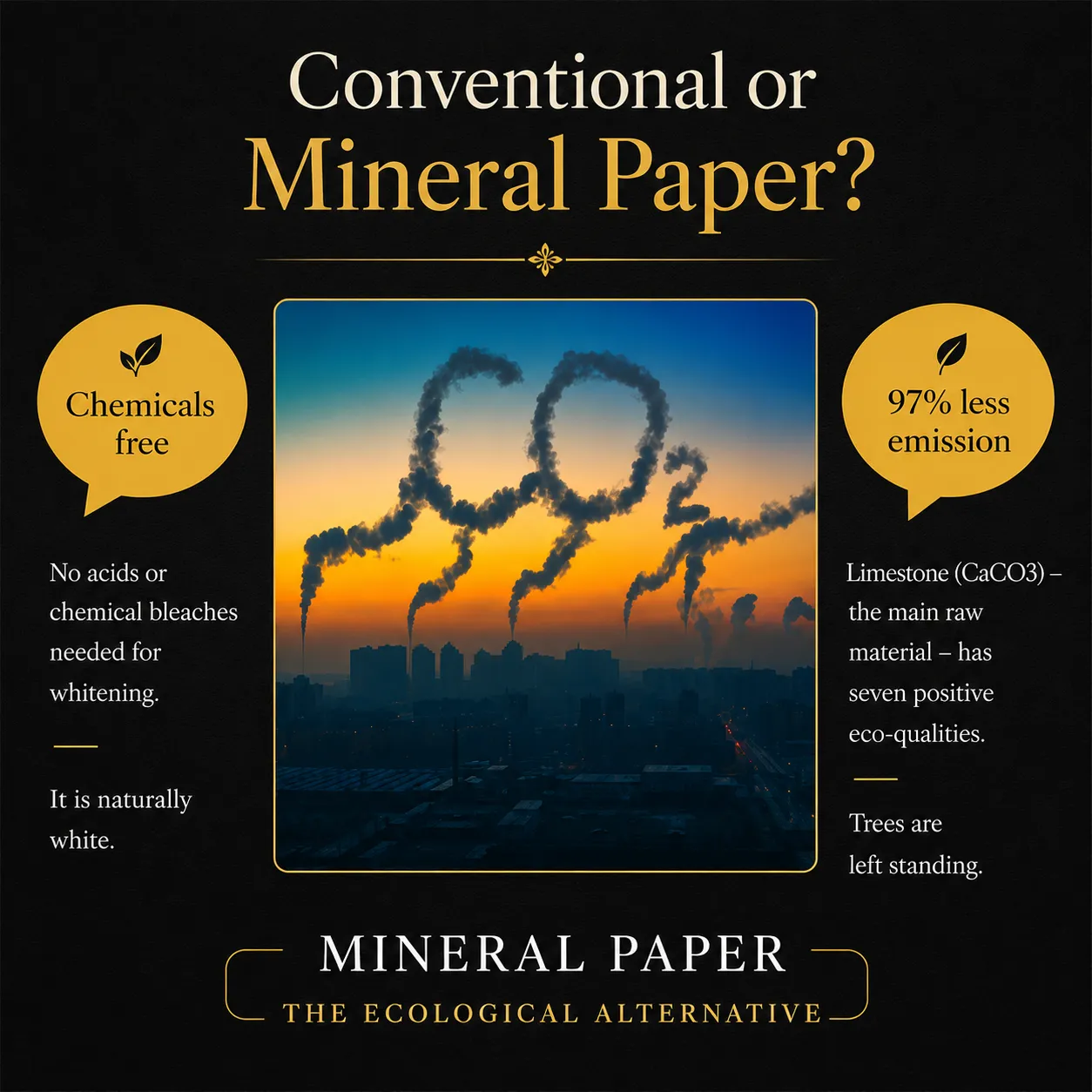
The use of mineral paper as another alternative to conventional paper may contribute to overcoming the problem of deforestation, which is a problem faced not only by developing countries but also by developed countries. It can be recycled and produces 67% less CO₂ emissions and does not use water at all in its production process.
“Mineral paper” is a revolutionary material, from a naturally occurring resource, not only because of its environmentally friendly manufacturing method, but also because it is a real alternative to the usual materials such as paper or plastic, and its elegant appearance and its impressive properties make the products desirable and addictive!
While producing conventional paper, one ton of traditional wood pulp paper usually requires 23 large trees, a lot of energy, and 2770 liters of water, whereas mineral paper can utilize waste scraps and crushed stones of several industries.
Wood Free
No trees are harmed in the manufacturing of mineral paper.
100% Natural
Limestone – main ingredient, is a natural product available in abundance.
Water Resistance
Water Repellent, enhancing durability and usage.
Durable
Tear-resistance and reusable. It is reminiscent of thin plastic.
Biodegradable
Being a natural product, it gets decomposed or broken down by sunlight.
Erasable
The writings can be easily erased/wiped with a wet cloth and pages reused.
MINERAL PAPER – DISPOSAL?
Photodegradable
It is photodegradable and can be decomposed after being exposed to constant sunlight for a certain period varying from 12 months to 18 months depending on the type of product.
Dissolves into Dust
Then it should dissolve into dust completely, like eggshells. It can also be burnt without creating toxic gases.
Durable Yet Biodegradable
Like polyethylene, mineral paper is durable and waterproof. However, as it decomposes into dust again, it can compete with biodegradable plastic.